
Different dining room surfaces demand different methods: solid wood needs gentle wood-safe cleaners and immediate spill removal to prevent irreversible damage, glass tabletops require streak-free glass cleaner, and upholstered chairs need fabric-specific spot treatment. Northern Mattress & Furniture 1st notes that clearing clutter first. Cleaning top to bottom protects specialized finishes across every dining room piece.
What do you need before you start cleaning?
Preparing the right tools and workspace prevents damage to Dining Room Furniture before a single cleaning step begins. Improper cleaning methods and materials can lead to significant furniture damage. Clearing clutter from the table and other surfaces is essential before bringing out cleaners and rags. This single step eliminates the risk of scratching finishes with loose objects and ensures every surface receives equal attention.
What cleaning supplies protect wood finishes?
Gathering the correct materials beforehand saves time and prevents finish damage. Northern Mattress & Furniture recommends these essential items:
-
Microfiber cloths (2–3 pieces): one for dusting, one for cleaning, one for drying. These cloths trap particles without scratching.
-
Mild dish soap: gentle on wood, avoids stripping the finish. Harsh detergents dissolve protective coatings over time.
-
Warm water: mixes with soap for a safe cleaning solution. Hot water damages wood fibers.
-
Soft-bristle brush: reaches crevices in chair spindles and table legs.
Why does cleaning order matter?
Cleaning from top to bottom prevents crumbs, dust, and debris from falling onto already-cleaned areas. Start with dusting the ceiling fixture and leave the floor for last. This downward approach eliminates rework and ensures every surface stays clean. A chandelier or ceiling fan sheds particles that settle on the table below. Cleaning those fixtures first protects the freshly wiped tabletop. Following this sequence reduces total cleaning time by eliminating the need to reclean lower surfaces.
How do you dust dining room furniture safely?
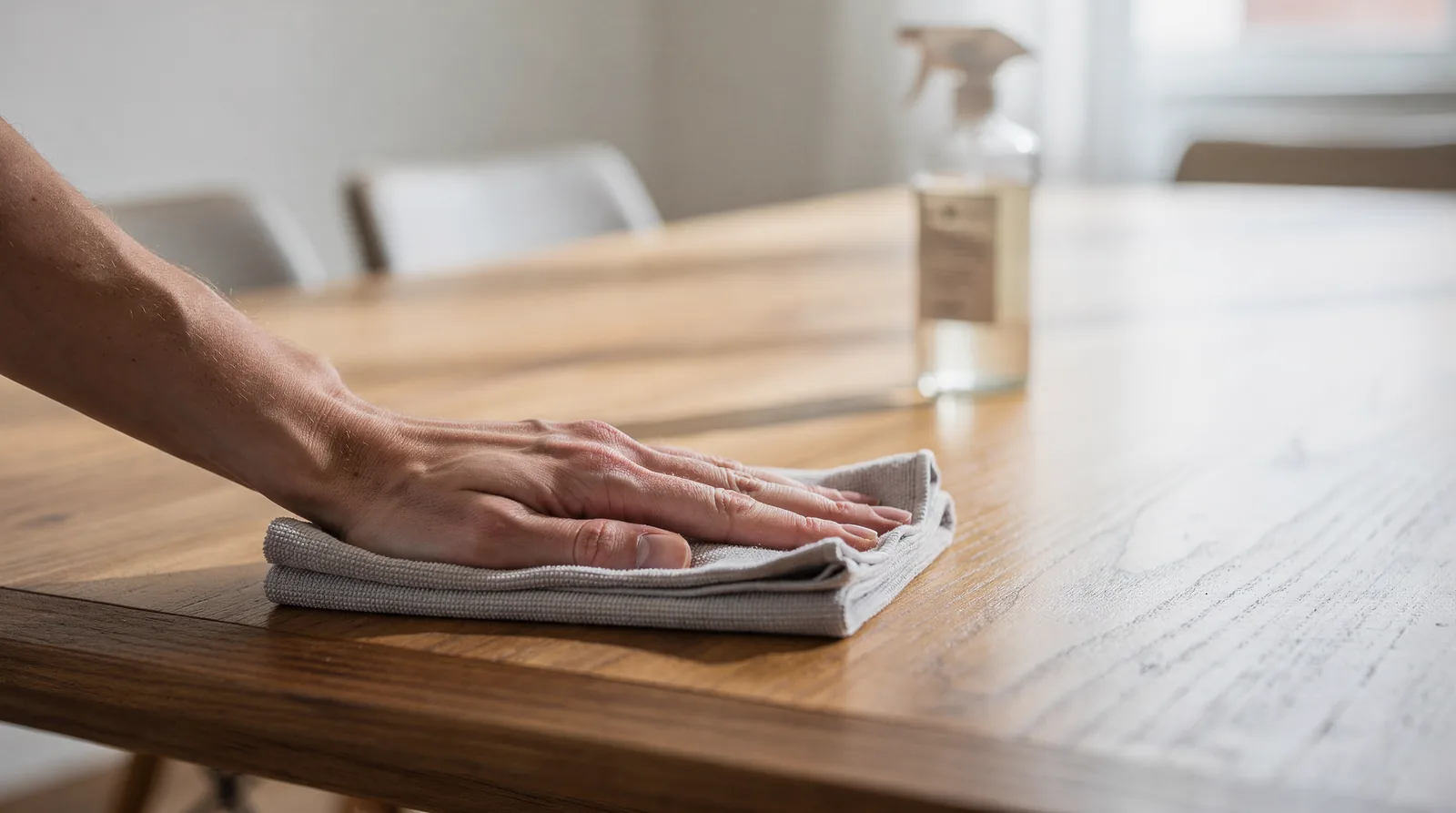
Safe dusting requires the right technique and tools from the start. Begin by dusting the highest surfaces in the room and work downward, leaving the floor for last. Using a microfiber cloth for dusting helps trap particles without scratching the wood finish. This simple workflow protects the integrity of the surface. Neglect can lead to irreversible damage within months for wooden furniture, so consistent care matters.
What tools prevent scratches during dusting?
Microfiber cloths outperform traditional dusters for wood surfaces. Having two to three pieces on hand. One for dusting, one for cleaning, and one for drying streamlines the process without cross-contamination. The fine fibers in these cloths lift dust particles rather than pushing them into wood grain. Skip feather dusters and dry paper towels; both can drag abrasive grit across the finish. Quality solid wood dining furniture can last for generations when properly maintained, making cloth choice a small but critical decision.
How does order of cleaning protect the finish?
Dust settles from high to low, so work top-down across the dining room. Start with the ceiling fixture, then move to wall art, window frames, and crown molding. Dust the tabletop and chairs next, and finish with baseboards and the floor. This sequence prevents re-depositing debris on surfaces already cleaned. Following this order spares customers the frustration of redoing work. Dinner hosts who skip this step often find dust resettling on polished tabletops within hours. The systematic approach converts a weekly chore into a preservation habit.
What is the best way to clean a wood dining table?
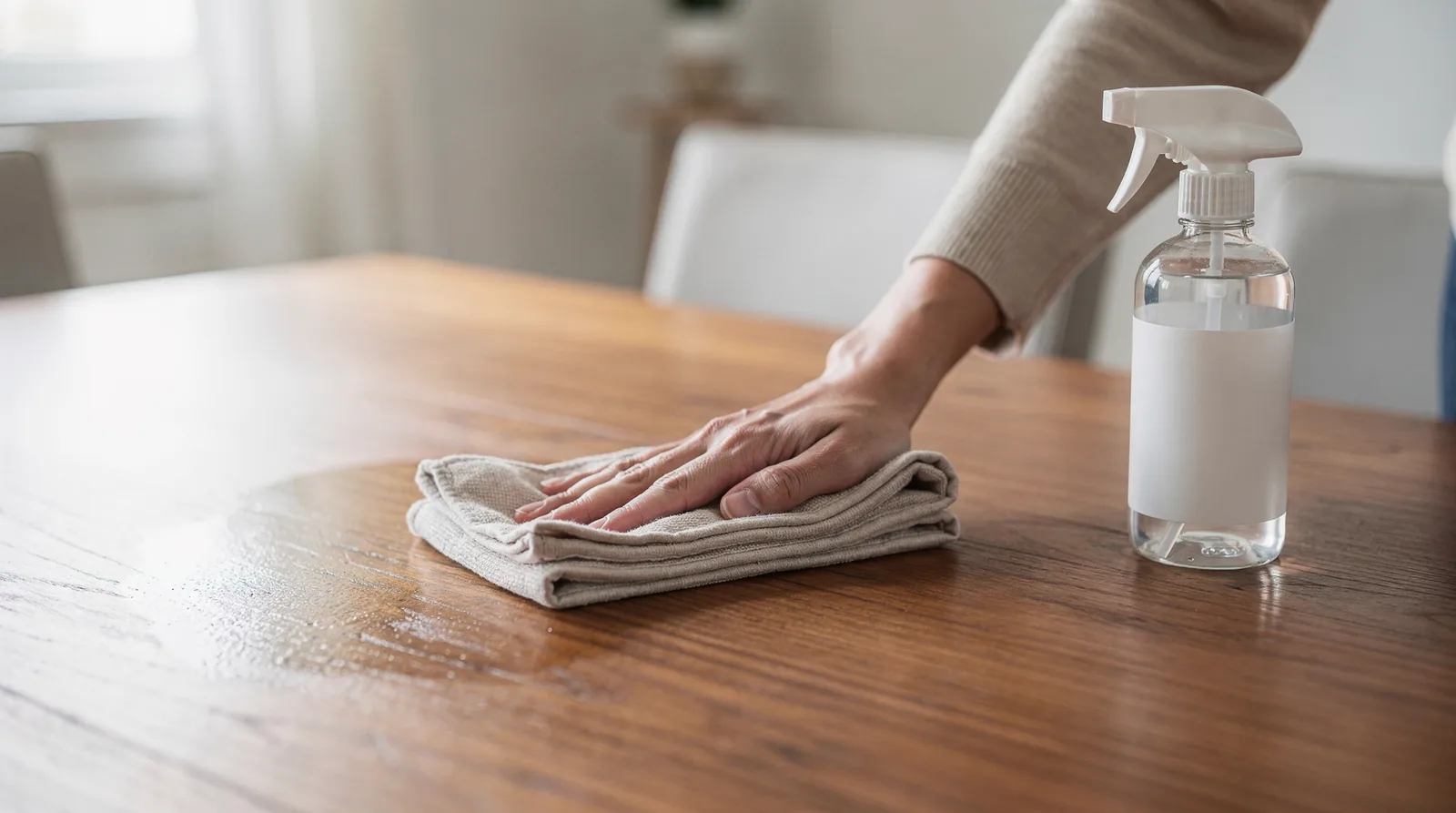
The best way to clean a wood dining table involves a gentle, two-step routine: a weekly dusting followed by a deep clean every few months. This approach removes daily grime without stripping the protective finish. Neglecting this routine allows buildup to dull the surface and invites permanent damage from trapped debris.
How often should a wood dining table be deep cleaned?
Deep cleaning a wood dining table once every few months removes accumulated buildup and protects the finish. Weekly maintenance should consist of dusting with a soft, dry microfiber cloth to prevent scratches. This schedule balances thorough care with minimal effort, preserving the table's appearance for years.
What natural cleaner is safe for a wood dining table?
A white vinegar and water solution provides a safe, effective natural cleaner for wood dining tables. This mixture removes grime, disinfects the surface, and leaves it fresh without introducing harsh chemicals. To prepare the solution, mix equal parts white vinegar and warm water in a spray bottle. Before applying to the entire table, test the vinegar solution on an inconspicuous area first to confirm the finish reacts well.
Steps for a safe deep clean:
-
Dust thoroughly: Remove all items from the table and wipe away loose debris with a dry microfiber cloth.
-
Prepare the solution: Combine equal parts white vinegar and warm water in a spray bottle.
-
Test first: Spray a small, hidden spot on the table and check for any adverse reaction.
-
Apply and wipe: Lightly spray the solution onto the table surface and wipe immediately with a clean microfiber cloth, following the wood grain.
-
Dry completely: Use a separate dry cloth to remove any remaining moisture, preventing water spots or warping.
This method keeps Dining Room Furniture looking its best without compromising the wood's integrity.
How do you remove stains from dining room furniture?
Removing stains from Dining Room Furniture requires a method that matches both the stain type and the furniture's finish. Improper cleaning and maintenance practices can lead to significant furniture damage. Most of this damage is completely preventable with the right approach. Solid wood furniture, with its tightly packed fibers, offers superior structural strength compared to cheaper alternatives. Tables made from plywood, particleboard, or MDF are likely to sag over time, making proper stain removal even more critical for preserving longevity.
What is the safest first step for removing a fresh spill?
For any fresh spill, immediate blotting prevents the liquid from penetrating the wood's protective finish. Use a clean, dry microfiber cloth and press firmly to absorb the spill. Rubbing spreads the stain deeper into the grain. After blotting, wipe the area with a slightly damp cloth, then dry immediately with a separate towel.
How should a customer treat a stubborn water ring or heat mark?
Water rings and heat marks require a gentle approach to avoid stripping the finish. Follow these steps:
-
Mix a paste of equal parts baking soda and non-gel toothpaste.
-
Apply the paste to a soft, damp cloth, not directly to the wood.
-
Rub the mark gently in the direction of the wood grain for 30-60 seconds.
-
Wipe away the paste with a clean, damp cloth.
-
Dry and polish the area with a furniture polish designed for the specific wood finish.
If the mark remains, a commercial wood cleaner designed for the furniture's specific finish type is the next option. Avoid abrasive scrubbers or harsh chemical solvents, as these cause permanent damage to the surface.
How should you protect your dining table finish daily?
A wooden dining table is a natural product and needs daily protection to keep its attractive appearance. Without consistent care, spills, heat, and scratches degrade the finish within months. Solid wood can last a lifetime if cared for correctly, but neglect accelerates damage. Northern Mattress & Furniture 1st offers a wide array of home furniture, including Dining Room Furniture sets. The business provides custom orders and customer-friendly financing options for furniture purchases.
What daily habits prevent finish damage?
Implement these five daily protection steps to preserve the table surface:
-
Use coasters and placemats under every glass, mug, or plate. Moisture rings form within minutes on unprotected wood.
-
Apply trivets or hot pads under serving dishes and hot pans. Heat softens most finishes and leaves permanent white marks.
-
Wipe spills immediately with a dry, soft cloth. Liquids left standing penetrate the finish and stain the wood beneath.
-
Dust the surface daily using a microfiber cloth. Abrasive dust particles scratch the finish when rubbed during regular use.
-
Keep the table clear of clutter between meals. Heavy objects left in one spot create uneven pressure and indentations over time.
How should clients clean the table after meals?
After each meal, wipe the table with a slightly damp cloth, then dry immediately with a separate clean towel. Never let water pool on the surface. For sticky residue, use a mild dish soap solution, one drop of soap in a cup of water, applied with a soft cloth, then rinse and dry. Harsh all-purpose cleaners strip the protective finish and leave the wood vulnerable.
Why does humidity matter for wood tables?
Wood expands and contracts with humidity changes. Place the table away from heating vents, radiators, and direct sunlight. A room humidity level between a notable share and a notable share prevents cracking and warping. Using a humidifier during dry winter months protects the structural integrity of solid wood Dining Room Furniture.
What cleaning products should you avoid on wood?
Two common household cleaning products damage wood dining room furniture: undiluted bleach and all-purpose cleaners containing ammonia or alcohol. These aggressive chemicals strip protective finishes and dry out solid wood fibers. The tightly packed fibers in solid wood make it structurally strong, but harsh products weaken that strength over time. Within a single year, routine exposure to the wrong chemical can leave a tabletop cloudy, cracked, or permanently dull.
What makes vinegar and dish soap safe for wood?
A white vinegar and water solution is gentle enough for most surfaces and helps wipe away everyday messes. Customers can mix equal parts white vinegar and warm water in a spray bottle, then wipe with a microfiber cloth. Mild dish soap avoids stripping the finish of wood dining tables. Both methods clean without the harsh chemical reactions that alcohol or ammonia-based products cause.
Which steps protect the wood finish permanently?
Every cleaning routine needs to follow the same simple sequence:
-
Dust first. Use a dry microfiber cloth to lift away loose particles before applying any liquid.
-
Apply the safe cleaner. Spray the vinegar-and-water solution lightly onto the cloth, never directly onto the table.
-
Dry immediately. Wipe away any excess moisture with a second dry cloth to prevent water rings.
-
Repeat weekly. Weekly light cleaning prevents buildup that forces someone to use harsh chemicals later.
How does the store’s history support better furniture care?
Northern Mattress & Furniture 1st was founded as a mattress manufacturing company by the Redman family. Today, the company remains a third-generation service business owned by a Maine-born, raised, and educated family. That long experience means the team knows exactly how finishes respond to different environments. Customers who buy dining room furniture from a family-run local source receive maintenance advice grounded in decades of real-world use rather than generic product labels.
How do you maintain wood dining chairs and legs?
Wood dining chairs and legs require a different maintenance approach than a tabletop because they endure constant handling, kicking, and exposure to floor moisture. Solid wood furniture responds to environmental changes and requires specific care techniques to preserve its beauty and structural integrity. Understanding how to care for wooden dining room furniture properly can extend its lifespan by decades while maintaining its aesthetic value. Neglecting chair legs leads to wobbling joints, scratched finishes, and premature replacement within just a few years.
What causes wood chair legs to loosen over time?
Repeated stress from sitting, shifting, and scooting creates microscopic wear at every joint. Temperature swings cause wood fibers to expand and contract at different rates, gradually loosening glue bonds. Humidity fluctuations can accelerate this process. Maintaining consistent levels is crucial, making seasonal tightening a necessity rather than an option.
How should clients tighten loose chair joints?
-
Inspect every joint: Check all leg-to-seat connections, stretcher bars, and cross braces for visible gaps or movement.
-
Apply wood glue: Use a high-quality yellow carpenter’s glue, not hardware-store white glue, which dries brittle.
-
Clamp and cure: Tighten clamps until a thin glue bead squeezes out, then wipe excess with a damp cloth. Let the joint cure for 24 hours before any weight touches it.
-
Reinforce with screws: For chairs that loosen repeatedly, drill pilot holes and install hidden screws through the seat into the leg tenon.
What cleaning routine protects chair legs from damage?
-
Dust weekly: Use a microfiber cloth to remove grit that acts like sandpaper on the finish.
-
Wipe spills immediately: Liquid seeps into end-grain at the floor contact point, causing swelling and finish peeling.
-
Apply paste wax biannually: A thin coat on legs and stretchers creates a barrier against moisture and scuff marks.
-
Use felt pads: Attach adhesive felt to every chair foot to prevent floor scratches and reduce sliding friction.
Northern Mattress & Furniture 1st, operating two locations in Central Maine since the merger of Priceless Mattress & Furniture with Northern Mattress Co., recommends inspecting chair joints every six months. Catching a loose leg early prevents the joint from wallowing out and requiring full replacement.
What common mistakes ruin dining room furniture?
Homeowners and renters often unknowingly shorten the lifespan of their Dining Room Furniture through a handful of repeatable errors.
How does using the wrong cleaner damage a wood table?
Many household cleaners contain harsh chemicals like ammonia, bleach, or alcohol. These substances strip protective finishes, leaving wood vulnerable to moisture, stains, and dullness. A simple solution of equal parts white vinegar. Warm water, applied with a microfiber cloth, removes grime without damaging the surface. Spray the solution onto the cloth, not directly onto the table, to prevent liquid from seeping into seams.
What role do heat and moisture play in ruining furniture?
Placing hot dishes, mugs, or serving platters directly onto a wood surface causes white heat rings and can blister the finish. Spills left to sit for even a few hours penetrate the finish and stain the wood beneath. Using coasters, trivets, and placemats consistently prevents this type of damage. Wiping up spills immediately with a dry, soft cloth keeps the surface protected.
Why is ignoring the environment a costly mistake?
Solid wood expands and contracts with changes in humidity. Placing a dining table near a heating vent, radiator, or direct sunlight causes the wood to dry out, crack, or warp over time. Maintaining a consistent indoor humidity level between a notable share and a notable share helps preserve the structural integrity of the piece. Northern Mattress & Furniture 1st offers quality furniture with excellent warranties. Customer-friendly financing, along with convenient in-home delivery, makes it easier for customers to invest in pieces that last.
Frequently Asked Questions
How often should dining room furniture be cleaned?
Dust wood dining tables and chairs weekly with a dry microfiber cloth, and follow up with a deeper clean every few months using a mild solution like equal parts white vinegar and warm water. Daily habits, such as wiping spills immediately and using coasters, prevent buildup between these cleanings.
What is the safest homemade cleaner for a wood dining table?
A solution of equal parts white vinegar and warm water is safe and effective for most wood dining tables. Spray it lightly onto a microfiber cloth rather than directly onto the table, wipe with the grain, then dry immediately with a separate cloth. Always test on a hidden spot first to confirm the finish reacts well.
Can I use bleach or ammonia-based cleaners on wood furniture?
No. Undiluted bleach and all-purpose cleaners containing ammonia or alcohol strip protective finishes and dry out solid wood fibers, leaving the surface cloudy, cracked, or permanently dull over time. Stick to mild dish soap or a vinegar-and-water solution instead.
How do you remove a water ring or heat mark from a wood table?
Mix a paste of equal parts baking soda and non-gel toothpaste, apply it to a soft damp cloth, and rub gently in the direction of the wood grain for 30-60 seconds. Wipe away the paste with a clean, damp cloth, then dry and polish the area. If the mark persists, use a commercial wood cleaner made for that specific finish.
Why do dining chair legs become loose over time?
Repeated stress from sitting, shifting, and scooting creates wear at every joint, while temperature and humidity swings cause wood fibers to expand and contract, gradually loosening glue bonds. Inspecting and tightening chair joints every six months, as Northern Mattress & Furniture 1st recommends, catches problems before a joint wears out completely.
Get Your Dream Dining Room Furniture Today at Northern Mattress & Furniture 1st
Why wait to create the dining space you've always envisioned? Northern Mattress & Furniture 1st brings you an incredible selection of dining room furniture designed to anchor your home with warmth, sophistication, and lasting durability. Whether you lean toward rustic farmhouse charm, sleek contemporary lines, or classic elegance that never fades, we have the perfect pieces to match your taste and lifestyle.
Our most popular dining sets and trending styles move fast, and once they're gone, restocks aren't guaranteed. Stop by Northern Mattress & Furniture 1st now, claim the furniture your home deserves, and start enjoying a dining room where everyone wants to gather.
